#17  Missing the Brightening Air

It is unfortunate that fatigue and tiredness are listed as synonyms in dictionaries, because fatigue, as a medical condition experienced by people with post-viral illnesses, is a different beast than the daily tiredness brought on by work and play. I’ve tried often to capture the distinction. I want to try again.

            You wake at eleven a.m. on the day your daughter and husband are sightseeing in London without you, because you knew you’d be in no shape to join them. But . . . eleven o’clock? Last night you set your alarm for ten o’clock, so either it didn’t go off, or more likely, you turned it off and don’t remember. Your dreams are still with you: people crowding onto a bus to run away from something; gunshots; forced to choose what and who to leave behind.

            In the here and now of this very late, rainy morning in London, however, you just need to run to the bathroom to pee. And you’re aware, if you’re going to join your husband and daughter for a show at the Old Vic tonight, you need to do so and get going tout de suite. To be on time for that show, you will need to catch a bus at six o’clock, and if you’re going to catch a bus at six o’clock, you must, in the next seven hours, get up out of bed, pee, bathe, put in your contacts, apply some makeup, decide what to wear, put it on, cook something to eat in the vrbo kitchen or venture out for food, download the transportation app, and figure out the bus or tube route to get you to the theater.

            And this is the part that you think healthy people do not experience: You want to pee. You want to bathe and dress. You want to go to the show. These activities are important and valuable to you. What you are feeling as you lie in bed is not depression, in which nothing seems important and nothing has value. On the contrary, you can picture yourself in the bathroom, you can picture yourself dressing in the bedroom, you can see yourself riding the bus to the Old Vic, greeting your daughter and husband and laughing at the sheer joy of being together at a famous theater about to sit and watch a lauded performance.

            Yet you continue to lie in bed. An assessment is happening. In the same way that someone with cracked ribs would reckon how much it’s going to hurt to roll over, stand up, and walk to the bathroom, you’re assessing how many invisible units of energy you’ve got in you to do those simple movements. Do you have enough?

            Momentarily, you lie to yourself. Of course you’ve got enough! This is easy! The path ahead is clear and doable! You’re just about to swing your legs over the bedside when reality spreads through your body like a swift, unwelcome invasion of some kind of parasite that devours energy and chews through your hopes. Your legs remain still under the covers. In a moment of truth, a moment you don’t intend to last, you close your eyes.

            When you open them, it is one o’clock. Two hours have passed. You now have five hours to get on board a bus to the Old Vic.

            The blinds in the bedroom of the vrbo are still closed, but you can tell by the sound that it’s stopped raining. You think of your daughter and husband. You know their plans were to sightsee in the city center. You wonder what landmarks they’ve seen today, what they’re seeing now, what you have missed and are missing. You wonder if they’ve managed to stay dry.

            Thinking about their sightseeing leads back again to the question of the show at the Old Vic. Can you pee and bathe and dress and eat and plan a route and catch a bus in time? A simple question for a healthy person, but for you it’s another, and now more urgent, calculus. So many pieces. So many variables. The strength in your legs, the level of your energy, the extent of your brain fog (can you in fact figure out the bus and tube route?), the time it might take to dress, the effort it might take to get something to eat, how close is the nearest restaurant or take-out, how far will you have to walk to a bus. And the really remarkable thing is that while you’re lying with your head on a pillow making these calculations, an entire hour goes by. Just like that. It’s now after two o’clock. Your window for actually stepping onto a bus has shrunk again. And you still haven’t gotten up to pee.

            You have an image of the Old Vic in your mind, though you’ve never been there. You see yourself sitting in a velvet seat between your daughter and your husband, poring over the program and taking in the set, full of promise, on the stage. You have a sense of the excitement you’d feel as the curtain rises, a sense of the nostalgia you’d feel for the evenings forty years ago when you were a student in England seeing plays with performers whose names now draw top billing. You know what the evening could be, and all that it could bring.

            But in spite of all the pictures in your mind and the desires of your heart, as though your body has decided of its own accord, out of its own knowingness and practicality, your fingers, as though they are independent of your brain, text a message to your husband: Can you return my ticket for tonight?

            And that’s it. You’re not going. With more than four hours to go, you’re not going. You didn’t decide. Your brain, your heart, your love, your desire; they had nothing to do with it. Your body decided. Your wasted, heavy, burdened legs and arms and cells and blood vessels and mitochondria—and whatever else is involved in chronic fatigue syndrome—made this wretched decision. Your heart sinks and you feel an irredeemable longing. Your mind is rehearsing apologies to your daughter and husband. But your body—you can’t deny it—is stunningly relieved. Every muscle, for hours now having been tensed in preparation for a Great Journey, lets go and sinks into the mattress.  

And it is that letting go you can’t forgive.

I spent that evening alone. I eventually did get out of bed, stayed in my pajamas, and cooked some eggs for my dinner. Since I had slept so late, I was awake when my daughter and husband burst in the door at eleven p.m., brimming with news of their sightseeing and reviews of the play, which they both deemed marvelous. After my daughter left and my husband went to bed, I lay awake on a couch in the living room reading the script they had bought me. The play was The Brightening Air, by Conor McPherson. Someday, I hope to see a production of it. When I’m not so tired.
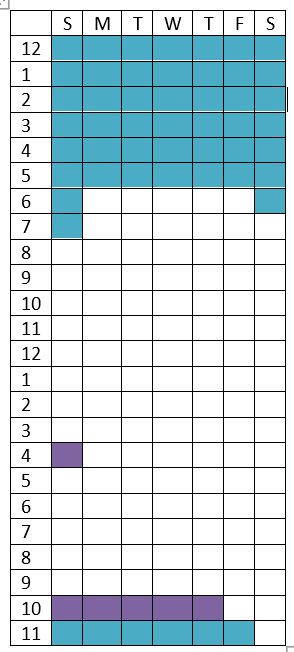
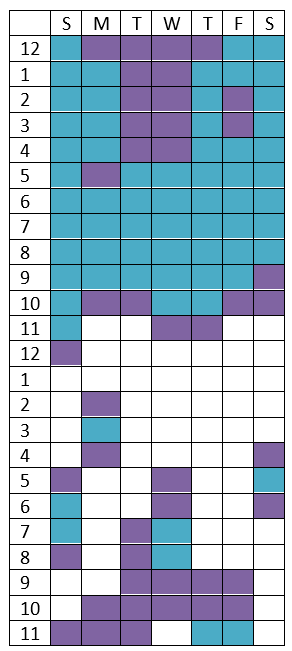
Image: Photo by uriel on Unsplash

#15  O Gentle Sleep!

            You’d think someone who suffers fatigue would sleep like a baby, often and long. It is not so.      

            The cruel irony of ME/CFS is that sleep is as hard to come by, and as unpredictable, as love or fortune. Sleep can come easily by ten p.m. one night and hold off until three a.m. the next. It can hit at one in the afternoon, like a sudden, unforecasted snowstorm, last for five hours, and then stay away until dawn the next day. If it settles in at a normal time in the evening, it might very well stick around for the entire next day, while most folks are putting in a full day’s work.

            Most of the time, sleep hangs around way too long in the morning, sometimes until noon. And then every so often, for no reason at all, it departs at daybreak and gives me what I almost never get: the hope of the rising sun and a full day of wakefulness.

            Sleep is like the poor rabid dog in Old Yeller, zigzagging down the street at the end of the story with no control over its movements. Sometimes, I just want to shoot it.

            As I understand it, sleep is like this for most people with ME/CFS. I’m not sure anyone truly understands why. (If you have an explanation, please share!) I believe one theory is that our autonomic nervous systems are awry, so the things our bodies would normally do without thought—sleep, digest, fight infections—they don’t do very well.

            Of course, many older adults struggle with sleep. Such struggles are not uncommon. When I’m up in the night, even as late as two or three, I can see the light on over at my retired neighbors’. And I know my husband often wakes long before his six o’clock alarm, wishing his sleep had lasted longer. Nevertheless, I have the sense that, for the most part, adults my age are heading to bed some hours after the sun has set and are waking around the time the sun is rising, give or take. Whatever difficulties they may have with sleep occur within a basic regularity of sleep and wake cycles.

            The only way to capture the difference between “normal” sleep and ME/CFS sleep is to picture it, so I created two charts.

The first is a chart of the hours I imagine a healthy adult sleeps and rests. Sleep is shown in blue, rest in purple. This adult gets into bed around ten on weeknights, reads for a while, and then falls asleep. On Friday and Saturday nights, she watches TV and skips reading. Watching TV that late may very well keep her awake, so she sleeps in a bit on Saturdays and Sundays and sometimes enjoys a rest on Sunday afternoons.

Normal Adult Sleep and Rest Chart

            This is, of course, an imagined average, from which actual adults surely vary widely. My sisters, for example, are in bed by nine and up well before six every day, including weekends, and I doubt they’re getting a nap on Sundays. Some of my friends are night owls; they’re awake after midnight, productively engaged, and then rise later in the morning. The key, though, is that their patterns are fairly regular.

            Now my own chart. Again, sleep in blue, rest in purple. And rest does really mean rest: lying in bed listening to music or a podcast or doing nothing. Watching TV and reading do not count as genuine rest for people with ME/CFS.

ME/CFS Sleep and Rest Chart

            The most notable feature of my chart is the far fewer white squares. This is what I mean when I tell people (the few I do tell) that I have a limited supply of “energy dollars” to spend each day.          

Having few energy dollars means that I will miss out on things and not accomplish much. But the really awful part of sleeping like this is the embarrassment.

            One day last summer our ninety-year-old neighbor knocked on our back door shortly after eleven. I felt I had to answer because he might be in need of something, but I was in my pajamas and bathrobe. When I opened the door and he saw me, an awkward chortle escaped him. He looked down at the floor. I could only guess what he was thinking: Why is my neighbor in her night clothes in the middle of the day? My cheeks burned. (I haven’t explained my illness to this neighbor, nor to many others.)

            To sleep in the middle of the day, when other adults are working, contributing to society, socializing, and just generally being adults, is to land in the realm of childhood—naps, and pjs, and lines on my face from the pillow at two in the afternoon. It’s not answering texts and not replying to emails and not picking up the phone. It’s eating a peanut butter sandwich for dinner because I wasn’t awake to prepare a meal. It’s incompetence squared.

            When family or friends ask me what I was “up to” today, I never mention the hours of sleep and rest. “Oh, I haven’t been too busy,” is my evasive reply. I can’t imagine that there is anything to be gained by telling them I just woke up and am still in my pajamas.

            And so the invisibility of ME/CFS continues. I perpetuate it by not being honest about the contours of my daily life.

            Consider this my confession.

#14 What Do I Need?

            The light from a gray day in northwest Wisconsin is fading. Through the window in the cabin bedroom, the color is deepening from one adjacent Pantone shade to another, like someone is flipping through a color wheel. Soon I’ll see the reflection of what’s in the room rather than the trunks of the trees outside it.

            I’ve been in bed all day. My energy bank account is at zero. Actually, it’s less than zero. I’m in debt. I’ve been reminding myself to take deep, slow breaths, and with each breath imagining a shiny quarter dropping with a plink into a piggy bank.

            Earlier this afternoon, my husband stopped in the bedroom doorway and asked if I needed anything. After a moment, I shook my head, only because I couldn’t process his question quickly enough to give him an answer before he turned away.

            If I had been able to think more quickly, what would I have answered?

            Do I need anything?

            Yes. I need someone to bring me a bowl of warm food that’s easy to swallow.

Do I need anything?

            Yes. I need a friend or a family member or someone to ask me, how was today?

            Do I need anything?

            Yes. I need scientists to figure out the cause of this illness and discover a foolproof cure. I need them to have done that twenty years ago. I need all the doctors everywhere to be as educated about ME/CFS as they are about heart disease. Until they find a cure, I need all the doctors everywhere to have good ideas about how to manage this illness.

            Do I need anything?

            Yes. I need my friends to invite me to parties even if they’re probably right that I won’t be able to go. I need people to ring me up and tell me the latest news so I don’t feel so embarrassingly insignificant and out of the loop. I need my community to remember that I’m here and that I’m ill, even though they hardly ever see me and when they do I look fine.

            Do I need anything?

            Yes. I need the people from whom I’m asking these things to know that it’s truly okay that they don’t know what I need, because this illness is dismally uncharted territory for all of us. There’s no way they could know, and I do, truly, understand and accept that. But I need us to figure out what I need together, with no guilt, no blame, no recrimination, no apologies.

            In short, I need what every human being on the planet—ill or well—needs: to be cherished as part of a loving community, and to be accompanied all our days.

Photo by zengxiao lin on Unsplash

#13 What Is Lost and What Is Found

A fundamental question for me in this blog is: How much do I rely on the tools of literature—story, character, image, lyricism—and how much on scientific objectivity? I know it’s not one or the other, but what is the balance?

We’re getting more scientific data about ME/CFS these days. Thanks largely to the attention paid to long covid, we have a better gauge of the number of people living with post-viral illnesses, what their symptoms are, and what treatments have worked, at least for some. We know a bit more about some of the biomechanisms of these illnesses, maybe a bit more about what’s happening at the cellular level.

But only through the details of story can I attempt to capture what living with relentless fatigue and post-exertional crashes is.

How do I communicate what is lost and what is found? How what is lost is the size of Lake Michigan, and what is found is the size of the pond at my cousins’ rural Michigan home when we were kids. We skated on the pond in winter, and in the summer, two pulls on a set of oars would row us out to the center of the pond, where we could slide overboard and swim without getting tangled in the weeds that filled most of the water.

On those visits to my cousins, would I rather have had the endless soft sand beaches, the wide sky, and the thrilling waves of Lake Michigan? Yes, I would.

But with my cousins, there was joking and laughter and a lot of sunshine, and all the kids and grownups eating burgers and potato salad afterward up at the house.

So it wasn’t Lake Michigan, but it lives in the memory as good.

#12 A Typical Day

On this typical ME/CFS day, so much like all the other days, I’m pleased to be out of bed at ten. That gives me a couple hours to rev up before the clock flips over into p.m. Something about waking after the stroke of noon feels like a defeat.

I put the kettle on and sit in the sunroom while it comes to a boil. I add a teabag to the pot and sit in the sunroom while it steeps. Then I pour myself a cup and sit in the sunroom for a very long while. I’ve gone from bed to sitting. This is progress.

I watch birds at the feeder. I read the morning news on my phone. I write up a list of tasks to do today. But mostly I’m tuning in to my body, waiting for a quiet signal that I have enough energy to start my day, hours after the rest of the world has started theirs.

Today the signal comes when I have been sitting for just an hour. I am so happy! This is good!

I dress, put in my contacts, and have a bit of breakfast. I feel remarkably clear-headed.

Up in my office, I open my laptop. I schedule an appointment with a new primary care physician (this has been on my to-do list for months). I message a question to the doctor who manages my chronic fatigue. I pay a bill online. I check my calendar for upcoming appointments. I’m worried because, two weeks from now, I have a medical appointment and a haircut on successive days. No time to recover in between. But the thought of not being able to go to two appointments in two days is still ridiculous to me. I close my calendar.

By now, fatigue is starting to make itself known. Just a little bit. It’s tapping me on the shoulder, not aggressive, but certainly insistent. I understand that I should lie down for a few minutes, take a “planned rest,” as one CFS expert calls it.

After ten minutes of lying flat on my bed, I’m impatient. I do have the energy to work, and I’m going to. Planned rests be damned.

Back to the laptop. I open a spreadsheet I’ve been building to track our charitable contributions. I make a phone call to one of the charities. Send an email to another. Peruse the spreadsheet and make some adjustments in formatting. But the fatigue of sitting at my desk really is catching up to me. However, I so much do not want to lie down. I’m sick of lying down. Maybe I can get up and move instead.  

I tidy up my office. I make my bed and pick up clothes off the floor in the bedroom. I walk downstairs to get a glass of water in the kitchen.

But now fatigue is shaking me by the elbow. It’s poking me in the ribs, kicking the backs of my knees. I am so annoyed, so discouraged. But when I lie down on my bed and pull an afghan over me, I can’t deny the sheer physical relief.

I bring up Spotify on my phone. Click on the Wailing Jenny’s radio. I’ll take that twenty minutes planned rest and then I’ll drive to the neighborhood grocery. I know I can’t do a big shopping today, but I can pick up a few things to keep me going.

I wake two hours late. It’s gone four. Fatigue has simply moved in on top of me, pinning me to the bed. The trip for groceries fades away. Finishing the spreadsheet fades away. The possibility of cooking a good dinner fades away. Whatever “energy dollars” I started the day with are gone. I’ll lie in bed for an hour waiting to feel enough strength to get up. I’ll slap together a pb and j sandwich, talk for a bit with my husband, and go back to bed. This scenario has happened so many times that I don’t even really feel the disappointment. It’s muted, like the gray March skies outside.

But I loved my morning! I loved those hours in my office—doing, making, moving pieces of my life forward with skill and intelligence.

This has been a good day.

#5 Crosby

To be out of step with the world and in step with a dog is a singular experience.

It is a quiet, secret existence known only to your non-judging companion. Only he observes all the mornings you can’t get out of bed until almost noon and all the afternoon hours you give up the quest for normalcy and lie back down. Your human family sees some of these mornings and some of these afternoons, but they, mercifully, are spared many of them because they are working or traveling or playing, as they should be.

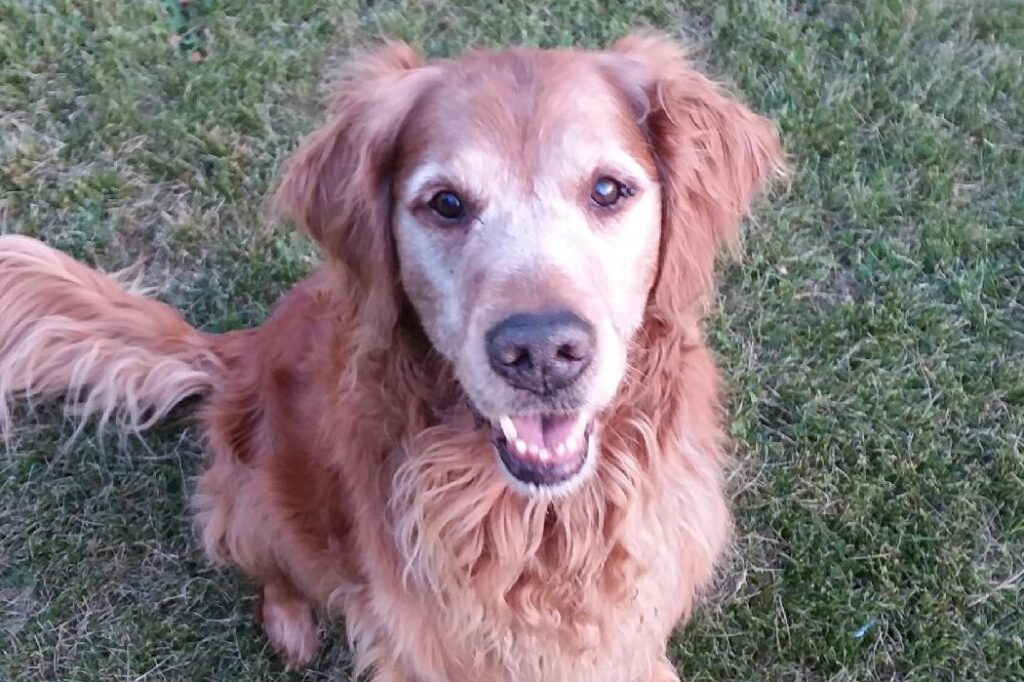
Only the clear-eyed dog lifts his head every time he hears you crying for the life you’ve lost, and only his rough tongue licks your face every time you seek his thick, auburn fur for comfort. He’s the one who knows that, on good days, you hum when you walk, and on bad days, you don’t. In his soul are recorded your ups and downs, your prayers, your tantrums, your efforts to scrape yourself off the bed and into the world. His is a perspective that will remain forever unshared.

He died a week ago, and everything is empty: the bed, the rugs, the yard, the back porch. My face is empty. My hours are empty. The world’s observations of my life through his eyes are shut down.

Though I have tried in this blog to render a full picture of a life reined in by fatigue, no one—not one other creature—can know the outlines, shades, and contours of that life as he did. It does not matter that he could not speak to me in English of my experiences.

I spoke to him.

The silence of his absence is felt in the bones.

# 3 What’s the Plan for Today?

This morning, my husband asked me my plan for today.

My reply: I have no idea.

It’s been a long time since I made plans for a day. Instead, I have hopes. Today, I hoped to do some grocery shopping and cooking, tidy up the kitchen, and plant the impatiens I bought yesterday. I truly thought it was a realistic list.

I was out of bed just before ten, had a cup of tea, blended my breakfast protein smoothie, and talked for a while on the phone with my sister and my mom. After I hung up, I thought a brief lie-down would be a good idea. Pacing is so important when you have fatigue. If you take the breaks you need, you can last longer.

I laid down at 11:30 a.m. thinking I’d need just twenty minutes of rest, but I fell asleep. When I woke, I was the opposite of refreshed and ready to go. Fatigue lay on top of me like fathoms of water. I turned just my head to look at the clock and felt the slump of disappointment that is so familiar these days. It was four o’clock in the afternoon.

I thought about the grocery store and the cooking and the kitchen and the impatiens. I kept thinking about them while I laid in bed, under the weight of an ocean, until about five o’clock when thirst and hunger pushed me down the stairs. I thought about them again when I’d had something to drink and eat. I could still get to the store. I could still plant flowers. Plenty of daylight left. But my arms and legs were weak strangers to me. They carried me up the stairs back to my bed, and that’s where I have remained.

Discouragement is the constant companion to chronic fatigue. It can pull you under and anchor you to depths you hadn’t known existed.

As much as I can, on days like today, I surface toward encouragements. In Pema Chodron’s When Things Fall Apart: Heart Advice for Difficult Times (Shambala, 1997), she writes, “We don’t know anything. We call something bad; we call it good. But really we just don’t know” (9).

I want to label the disassembling of today’s hope list bad. Negative. Disappointing. HopeLESS. Seems to me that it is all of those things. But Chodron may be right. I possibly don’t know anything. I possibly don’t know that there is some purpose to illness, some undiscovered sea creature of energy in the drowning of fatigue. So I don’t plan. I hope.

Hoping seems more in keeping with not knowing than planning does. So tomorrow, I’ll have a new hope list.

Julie

Photo by Julie Blake Edison on Unsplash