#18 What Do We Do When They’re Shooting at Us?

I live in St. Paul, sister city to Minneapolis. Renee Good and Alex Pretti were killed just across the Mississippi River from where I live, close to neighborhoods where many friends live.

              The ICE and Border Patrol agents responsible for these killings have been swarming our Twin Cities for months, in astonishing numbers, in vigilante mode. They’ve been compared to the Nazi Gestapo, with good reason.

              The good people of Minnesota have mobilized to meet the moment. Thousands have been protesting in freezing temperatures and continue to do so. Neighbors have formed watches to alert vulnerable people when ICE and CBP are in the area. Their whistles have become a national symbol of defiance. Minnesotans are bringing groceries to people who are forced to stay home for fear of abduction, and standing guard outside schools as parents drop off and pick up their kids. Some people are gathering for vigils, some are gathering to sing, some are gathering boxes of diapers and formula to leave at drop-off sites.

              But what can I do, nearly housebound as I’ve become? What can the chronically ill do in the face of tyranny?

              This is not a question I ever thought I’d have to consider.

              Any time tyranny has tried to take root in the world, there must have been people like me who for physical reasons could not do all they wanted to do to fight it. In such times, how did those disabled by chronic illness contribute?

              I write letters, I call my representatives, my husband and I donate money. But the need is so much greater. The fight is out there and I’m in here.

              The irony of post-viral illnesses is that you do the most by doing nothing. That is, you accomplish the most healing by completely resting.

              But doing nothing seems a poor choice in these times.

              I think of the character of Billy Kwan in The Year of Living Dangerously, a film set in Indonesia during the political unrest of 1965. When his friend, the journalist Guy Hamilton, says there’s no point in helping just one oppressed individual because the need is too great, Billy responds with Tolstoy’s query: What then must we do? Tolstoy considered giving all his money to the poor but decided it wouldn’t make a difference because it wouldn’t change the structure of poverty.

              In the film, Billy proposes his own answer to the question:

              “You just don’t think about the major issues. You do whatever you can about the misery that’s in front of you; add your light with the sum of light.”

              That solution, of course, requires believing in a sum to be added to. And I do believe. Reports of my friends, neighbors, and fellow Minnesotans shining lights in this dark occupation are everywhere.

When they’re shooting at us, we light a match, and even I can do that.

#13 What Is Lost and What Is Found

A fundamental question for me in this blog is: How much do I rely on the tools of literature—story, character, image, lyricism—and how much on scientific objectivity? I know it’s not one or the other, but what is the balance?

We’re getting more scientific data about ME/CFS these days. Thanks largely to the attention paid to long covid, we have a better gauge of the number of people living with post-viral illnesses, what their symptoms are, and what treatments have worked, at least for some. We know a bit more about some of the biomechanisms of these illnesses, maybe a bit more about what’s happening at the cellular level.

But only through the details of story can I attempt to capture what living with relentless fatigue and post-exertional crashes is.

How do I communicate what is lost and what is found? How what is lost is the size of Lake Michigan, and what is found is the size of the pond at my cousins’ rural Michigan home when we were kids. We skated on the pond in winter, and in the summer, two pulls on a set of oars would row us out to the center of the pond, where we could slide overboard and swim without getting tangled in the weeds that filled most of the water.

On those visits to my cousins, would I rather have had the endless soft sand beaches, the wide sky, and the thrilling waves of Lake Michigan? Yes, I would.

But with my cousins, there was joking and laughter and a lot of sunshine, and all the kids and grownups eating burgers and potato salad afterward up at the house.

So it wasn’t Lake Michigan, but it lives in the memory as good.

#11  The Slow Process of Accepting Loss

            Have you ever noticed how films often use just one scene to show a character accepting a great loss? The character has an enormous cry in which all their grief pours down their face in tears and snot. Outside, thunder rumbles and rain beats down. In agony, the character falls to the ground after, perhaps, breaking something valuable, a metaphor for their former selves. Cut to the next scene: The character is shown leaving a house or entering some other building, with purpose, with confidence. They are a vessel emptied and refilled. The action of the film can now lead to its conclusion.

            I have not found loss to be like that at all.

            I cry in little bits. I pour off a tiny portion of whatever was in the vessel—my former me, former relationships, former goals—and for a while, maybe a long while, I just have less in the vessel. Less of a self. I’m four ounces of wine in a six-ounce glass; a pint of milk in a quart bottle.

            In time, something I read or something someone says or something I experience adds a dram to the bottle. A bit of new wine, maybe better quality. A spoonful of fresher milk. I’m, say, sixty percent the old me and ten percent the new me. Still kinda empty.

            After a while, I do a little more crying. I empty, am aware of the lack of me, and then fill a wee bit more. Now I’m fifty parts old and twenty parts new.

            And so, over time that stretches as far as hope is from despair, I reckon with losses.

            I should probably spend more time on this loss and transition process than I do. I could meditate, read, walk in the woods, write in a journal. But I’ll tell you, I am really resisting this emptying and filling business. The truth is, as much as I complained about the details of my life before chronic illness, I liked a lot of the basic contours. I. want. to. keep. them.

            I want to keep my career, and specifically my most recent job. I want to keep my colleagues and my mentors and my students. I want to keep my involvement in my children’s lives, my visits to family, my time with friends. I want to travel more than I did, not less.

            I’m very reluctant to let go of the old and extremely uncertain about the new stuff I’m putting in the bottle, or whether there even is anything to put in the bottle.

            But I think it must be done. And maybe moving into the new, with courage, means crying in bigger bits, letting go of larger amounts at a time, sitting still for longer, and filling with greater amounts of quiet and unanticipated new.

            After quite a few years of illness, I think I know how to do that. And I think I shall.

Photo by Zoe on Unsplash

#5 Crosby

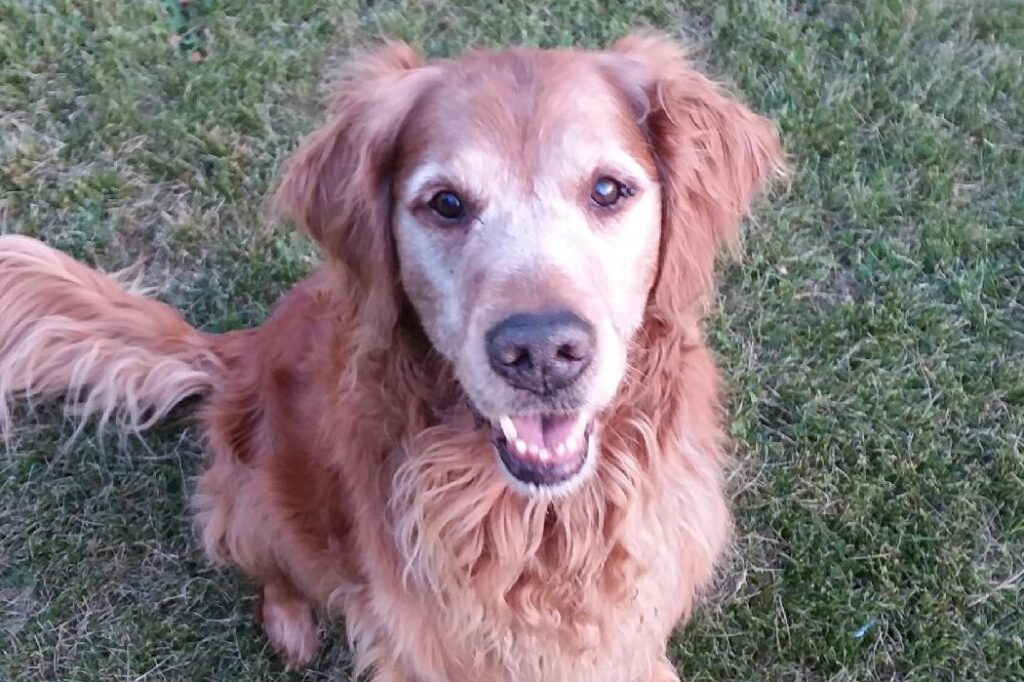
To be out of step with the world and in step with a dog is a singular experience.

It is a quiet, secret existence known only to your non-judging companion. Only he observes all the mornings you can’t get out of bed until almost noon and all the afternoon hours you give up the quest for normalcy and lie back down. Your human family sees some of these mornings and some of these afternoons, but they, mercifully, are spared many of them because they are working or traveling or playing, as they should be.

Only the clear-eyed dog lifts his head every time he hears you crying for the life you’ve lost, and only his rough tongue licks your face every time you seek his thick, auburn fur for comfort. He’s the one who knows that, on good days, you hum when you walk, and on bad days, you don’t. In his soul are recorded your ups and downs, your prayers, your tantrums, your efforts to scrape yourself off the bed and into the world. His is a perspective that will remain forever unshared.

He died a week ago, and everything is empty: the bed, the rugs, the yard, the back porch. My face is empty. My hours are empty. The world’s observations of my life through his eyes are shut down.

Though I have tried in this blog to render a full picture of a life reined in by fatigue, no one—not one other creature—can know the outlines, shades, and contours of that life as he did. It does not matter that he could not speak to me in English of my experiences.

I spoke to him.

The silence of his absence is felt in the bones.